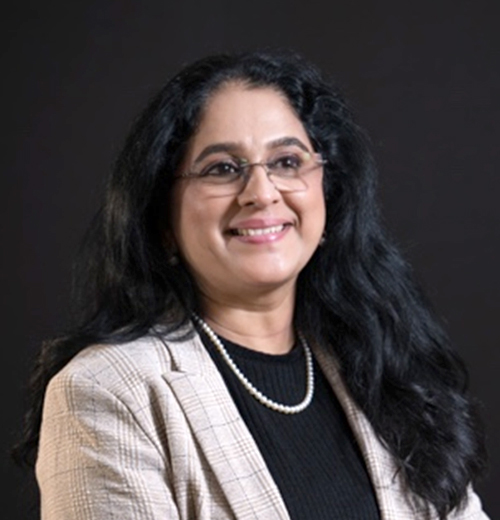
Auto Ascend Pvt Ltd, India
Title: The Intelligent Vehicle: When sensing becomes Decision Making
Indian Institute of Science, Bengaluru
Title: Physics Guided Neural Network Based Auto Pilot Design for Rigid Aircrafts
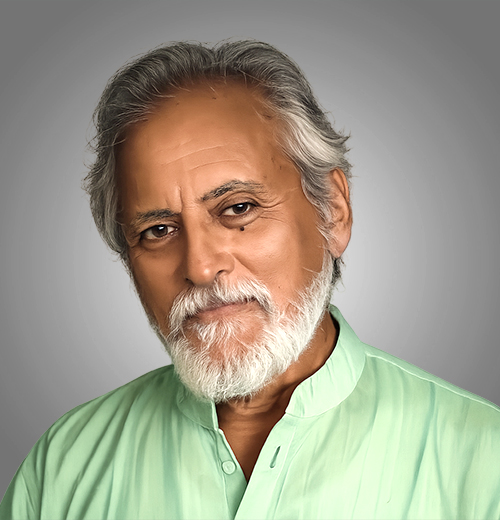
Indian Institute of Management Ahmedabad
Title: Reaching the last in line-Antyodaya: overcoming barriers for developing & diffusing frugal & extremely affordable innovations
Latha is a dynamic business leader with more than three decades of experience. She is the founder and CEO of AutoAscend that focuses on strategy and technology consulting in the mobility domain and leadership coaching and mentoring. She is a strategy and technology advisor for a few Tier1s and service organizations in India and an external advisor for consulting companies like Bain and Co and Zinnov. She is also part of strategic initiatives of the government on skill build and e-mobility topics.
Till June 2025 she was the Vice President and head of Technical Center India of Continental Automotive, responsible for engineering competence for global and local markets, focusing on Automotive Technologies that include Autonomous Mobility and Safety, and Vehicle Networking and Information business areas and several Center of excellences in the new technology areas . Before joining Continental, Latha was heading the powertrain and electrification business of Robert Bosch Engineering and Business Solutions Pvt Ltd. She has also worked with Siemens Information Systems Ltd in multiple roles which includes engineering as well as business development serving in diƯenet geographies.
Latha is known for her inclusive style of leadership and has played an important role in developing the tech women community for the last 2 decades. Latha has received several industry accolades including The top 10 technology women leaders in India award, Solidarity Idol award at CXO level, WILL women’s choice award, DE&I Tech leadership award in 2024, top AI influential leaders award, Exemplary GCC leaders of India in the CXO category in 2024 etc to name a few. She is also a well-known speaker in the area of business, technology, leadership and diversity and has made her mark in several forums.
Latha is very passionate about coaching and mentoring and is also a certified coach as well as certified in behaviour analysis and mentoring.
The automotive industry is transitioning from basic driver assistance to fully software-defined vehicles and the traditional paradigm of centralized computation faces a critical scaling bottleneck. Historically, automotive sensors acted as passive data collectors, funnelling raw, high-bandwidth streams to a centralized electronic control unit. In the modern mobility era, this architectural design creates unacceptable latency, severe thermal overhead, and vulnerabilities in data transmission. The talk will highlight how sensor fusion, edge intelligence, and functional safety are reshaping automotive architecture. It will give a view of how intelligent sensing will define the next generation of safe, intelligent, and sustainable mobility.
Prof. Gopalakrishnan received his BE degree from UVCE, Bangalore, Master’s Degree in Engineering Mechanics from Indian Institute of Technology, Madras, Chennai and Ph.D from School of Aeronautics and Astronautics from Purdue University, USA in the year December 1992. Before proceeding for USA for his doctoral studies, Prof. Gopalakrishnan briefly worked at NAL Bangalore in the Structures Division. After his Ph.D., he was a Postdoctoral Fellow in the department of Mechanical Engineering at Georgia Institute of Technology. In the year November 1997, he joined the Department of Aerospace Engineering at Indian Institute of Science Bangalore, where currently he is an Honorary Professor. His main areas of interest are Wave Propagation in complex media, Computational Material Science, Computational Mechanics, Smart Structures, Structural Health Monitoring, MEMS and Nano Composite Structures.
Prof. Gopalakrishnan has extensively published his work on many top-rated international journals. He has a total of 250 international journal papers, 10 graduate level textbooks, two undergraduate books, 13 book chapters, and 175 international conference papers. He has an h-index of 57 in Google scholar with nearly 13000 citations, which is highest in India for any researchers in Aerospace domain. He is in the editorial board of 5 international journals and is the Editor-in-chief of ISSS Journal for Micro and Smart Systems and is the Associate editor for Smart Materials and Structures and Structural Health Monitoring international journals. Prof. Gopalakrishnan is decorated with many awards and honors, which include, International Structural Health Monitoring person of the year awards 2016 instituted by SAGE Publications, Fellow of Indian National Academy of Engineering, Fellow of Indian Academy of Sciences, Associate Fellows AIAA, Distinguished Alumnus Award, Indian Institute of Technology, Madras, Chennai, Satish Dhawan Young Scientist Award by Government of Karnataka, Biren Roy Trust award of Aeronautical society of India, Alumni Award of excellence in research at IISc in the year 2013 and the Royal Academy of Engineering, UK Distinguished visiting Fellowship. He was elected Fellow of Institute of Mechanical Engineers, UK in the year 2020. Prof. Gopalakrishnan figures in the Stanford list of top 2% of scientist in the world for four consecutive years. In July 2025, he received the ASME Founder’s award for his contributions to SHM and NDE. He has guided 33 Ph.D’s, 7M.Tech (Research) and 23 M.E students.
The autopilot design of rigid aircraft requires efficient control strategy due to the presence of uncertainties and disturbances arsing due to nonlinearities, parametric variances and variable external disturbances. The Uncertainty and Disturbance Estimator (UDE) control strategy is one of the well know methods to control these variations. In this talk, I will focus on developing Physics-Guided Neural Networks (PGNN) to mimic the UDE control strategy of an aircraft. PGNN requires solution of the highly nonlinear equation of motion of a rigid aircraft. The solution of the equation of motion will give state variables which are then passed on to the outer and inner loop controller to control the aircraft. In this talk, I will present 4 different strategies to solve the equation of motion using PGNN. Each of these strategies have variable number of neural networks. Multilayer Perceptron Neural Networks have been trained on-line with the Back-propagation algorithm and used in these controllers to obtain the desired tracking performance. The results obtained by these 4 different approaches are compared with the conventional UDE controller and the simple neural network-based autopilot design. The results show that the PGNN based approach is able to show comparable performance with least computational effort compared to other approaches. The implementation of PGNN into rigid aircraft autopilot architecture will be a significant step forward in control strategy. PGNN is shown to emulates the proven Uncertainty and Disturbance Estimator (UDE) technique for dealing with uncertainties, disturbances, and nonlinearities. This work not only improves aircraft control but it also highlights PGNNs promise in autonomous systems.
Professor Anil K. Gupta, Fellow of multiple national and international academies (FNAAS, FWAAS, FINSA), is a global pioneer in grassroots and inclusive innovation. He is Visiting Faculty at the Indian Institute of Management Ahmedabad and AcSIR, and founded the Honey Bee Network, National Innovation Foundation, SRISTI and GIAN to strengthen recognition, respect and rewards for grassroots knowledge systems. His mission is to expand both global and local spaces for innovation from and for communities, bridging informal creativity with formal scientific and industrial ecosystems.
Prof. Gupta has promoted open innovation, frugal engineering and social entrepreneurship, building platforms such as the Honey Bee Network CRIIA Awards and large open-access databases, including engineering student projects and a million US abandoned patents. His Shodhyatras—learning walks covering over 7,000 km across India—reflect his lifelong commitment to ethical engagement and learning from society. He continues to work toward establishing the Global Inclusive and Frugal Innovation Foundation.
Gandhian dictum of always keeping the persona of a disadvantaged and vulnerable family in front of our eyes while developing a solution so as to reach the unreached needs repeated reminders. There are several barriers in developing and diffusing frugal innovations for grassroots applications such as: a) targeting not the poorest with attendant larger constraints, b) choosing the users who can live with the constraints the solution is designed with, c) making the existing technological constraints as the limit of one’s imagination unlike the Italian students and faculty who developed Arduino to democratise electronics and make it possible for even non-engineers to use it including children; d) staying with in the disciplinary boundaries and avoiding co-creation with users, e) not worry9ing if solutions remain on shelf ( as one observer in a microelectronics semiconductor industry mentioned after my lecture, is not India the biggest graveyard of student projects (see techpedia.in for info on 200k projects by 550k students), f) when faculty, students and start-ups feel satisfied with solutions not reaching poor farmers or workers or tribals, g) when no inventory is made in each maker centre in educational or entrepreneurial ecosystem about unmet needs mapped through immersive learning like shodhyatra or similar efforts, and h) when complexity is preferred over simplicity and useability.
We discuss the ways to overcome these barriers and many more through simple heuristics developed in Honey Bee Network over the last four decades.
This is the biography of Speaker 4. Replace this text with the actual biography.
This is the abstract of Speaker 4. Replace this text with the actual abstract.
This is the biography of Speaker 5. Replace this text with the actual biography.
This is the abstract of Speaker 5. Replace this text with the actual abstract.
© Copyright 2027 IEEE - All rights reserved. Use of this website signifies your agreement to the IEEE Terms and Conditions . A not-for-profit organization, IEEE is the world's largest technical professional organization dedicated to advancing technology for the benefit of humanity.