
Jinan University, China
Title: Fiber-Optic Tumor Theranostics
University of Bari Aldo Moro, Italy
Title: From Ensemble Binding to Single-Molecule Statistics in Immunosensing
Yang Ran is a Professor and Vice director of Institute of Photonics Technology, Jinan University, Guangzhou, China. His research activities include optical fiber sensing, fiber Bragg gratings, biosensors, and photo-theranostics. He has authored and coauthored more than 100 papers in peer-reviewed journals and conferences, including Nature Communications, Nature Nanotechnology, Light: Science&Applications, Advanced Science, Chemical Engineering Journal, Biosensors and Bioelectronics. He presented over 30 plenary/invited talks at international conferences and hold 10 issued/pending patents. He had obtained 20 more competitive research/talent projects and awards, including the NSFC key project, Guangdong Special Support program and “Pearl River Talents”. He also serves as an Associate Editor of Optics and Laser Technology (IF: 5.0).
In vivo, real-time monitoring of tumor microenvironment (TME) biomarkers is of tremendous value for both clinical practice and mechanism research of tumors. Photo-theranostics has attracted widespread attention due to its high spatiotemporal resolution. However, its clinical translation is hindered by limited light penetration depth in tissues and systemic toxicity.
Against this background, the combination of optical fiber technology with photo-theranostic agents has been recognized as a viable solution and is emerging as a major research hotspot. Moving forward, achieving multifunctional integration and seamless compatibility with clinical medicine will be key to advancing this technology from the bench to clinical application.
Integration Strategy
We proposed a strategy based on wavelength division multiplexing technology. By co-immobilizing a pH
indicator, temperature indicator, and photothermal agent with non-overlapped excitation bands onto the
tapered optical fiber surface, we developed a fiber-optic theranostic probe enabling closed-loop tumor
photothermal therapy (PTT).
Clinical Compatibility
Clinical imaging technologies including Ultrasound, MRI, and
CT were used to guide optical fibers to deep-seated tissue lesions. These imaging
techniques also complement fiber-optic sensing by providing spatial information.
Overall, fiber-optic mediated theranostic technology is profoundly revolutionizing traditional photo-theranostics and paving a promising way toward precision diagnosis and treatment.
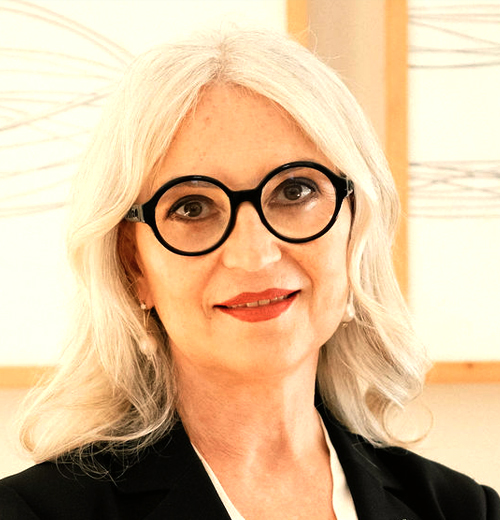
Bio: Luisa Torsi, an elected member of the Accademia dei Lincei and an international member of the National Academy of Engineering, is internationally renowned as a pioneer in the field of bioelectronic sensors and, more recently, for the development of highly sensitive diagnostic electronic and optical platforms.
She earned a degree in Physics and a PhD in Chemistry from the University of Bari, where she has served as Full Professor of Chemistry since the age of 40. Following a postdoctoral fellowship at Bell Labs in the U.S., she developed an interdisciplinary research approach that integrates electronic devices, analytical chemistry, and organic semiconductors. She has also held a position as adjunct professor at Åbo Akademi University in Finland and Vice President of the Scientific Council of the National Research Council. Currently she is President of ARTI Puglia, the regional agency for innovation and technology transfer.
Torsi has received numerous international accolades: she was the first woman to win the Heinrich Emanuel Merck Award for Analytical Sciences, and she also received the Exner Medal, a distinction previously granted to more than 20 Nobel laureates. The Accademia dei Lincei honored her with the Premio del Presidente della Repubblica, conferred by the Academy and formally presented by President Sergio Mattarella. Åbo Akademi University has also conferred on her an honorary doctorate. She is a Fellow of both the Materials Research Society and the Royal Society of Chemistry, and notably, she was the first woman elected President of the European Materials Research Society.
With over 290 scientific publications, nearly 21,500 citations, and 14 patents, Torsi ranks among the top 0.58% most-cited chemists worldwide, according to ScholarGPS®. She has delivered more than 200 invited talks, including over 60 plenary lectures.
She has led numerous national and EU-funded research projects, including an ERC Advanced grant and a platform for ultra-sensitive biomarker detection applied to early cancer diagnosis. She currently coordinates a project focused on detecting Xylella in olive trees in Apulia. Her commitment also extends to science communication and the promotion of women in STEM, through TEDx talks, the 100Esperte initiative, and even a feature in the Italian Topolino magazine, where she appeared as “Louise Torduck,” a successful scientist from Calisota Valley.
Surface plasmon resonance (SPR) and potentiometry have long been established as powerful label-free platforms for immunodetection; however, when operated without signal amplification, their analytical sensitivity has remained largely restricted to nanomolar concentrations. In this lecture, we discuss a comprehensive interpretative framework that reveals the coexistence of two qualitatively different sensing regimes governing immunoassays over an exceptionally broad dynamic range, extending from nanomolar to zeptomolar concentrations. Through systematic investigation of centimetre-scale sensing surfaces densely functionalized with pH-conditioned recognition layers, we show that detection at ultralow analyte levels is no longer governed by ensemble-averaged affinity interactions. Instead, the response is dictated by Poisson statistics associated with stochastic single- and few-molecule capture events on large-area interfaces. In this ultra dilute regime, individual binding events induce a pH-mediated dielectric reorganization of the capturing layer, generating a measurable plasmonic signal that enables direct, label-free detection at concentrations as low as 10–100 zM with a statistical confidence of 99%, while maintaining false-positive and false-negative rates below 1%. As analyte concentration increases, the sensing behavior progressively shifts toward a classical Maxwell–Boltzmann framework characterized by conventional binding isotherms. By explicitly accounting for instrumental noise, uncertainty propagation, and statistically robust decision criteria, and by modelling the full binding curves, we extract equilibrium parameters in both regimes, including an apparent binding constant unique to the ultralow-concentration limit. These results clarify the physical and statistical mechanisms underlying extreme sensitivity in large-area immunoassays and provide a general foundation for the rational design and interpretation of single-molecule plasmonic sensors operating without labels or amplification strategies.
Professor Anil K. Gupta, Fellow of multiple national and international academies (FNAAS, FWAAS, FINSA), is a global pioneer in grassroots and inclusive innovation. He is Visiting Faculty at the Indian Institute of Management Ahmedabad and AcSIR, and founded the Honey Bee Network, National Innovation Foundation, SRISTI and GIAN to strengthen recognition, respect and rewards for grassroots knowledge systems. His mission is to expand both global and local spaces for innovation from and for communities, bridging informal creativity with formal scientific and industrial ecosystems.
Prof. Gupta has promoted open innovation, frugal engineering and social entrepreneurship, building platforms such as the Honey Bee Network CRIIA Awards and large open-access databases, including engineering student projects and a million US abandoned patents. His Shodhyatras—learning walks covering over 7,000 km across India—reflect his lifelong commitment to ethical engagement and learning from society. He continues to work toward establishing the Global Inclusive and Frugal Innovation Foundation.
Gandhian dictum of always keeping the persona of a disadvantaged and vulnerable family in front of our eyes while developing a solution so as to reach the unreached needs repeated reminders. There are several barriers in developing and diffusing frugal innovations for grassroots applications such as: a) targeting not the poorest with attendant larger constraints, b) choosing the users who can live with the constraints the solution is designed with, c) making the existing technological constraints as the limit of one’s imagination unlike the Italian students and faculty who developed Arduino to democratise electronics and make it possible for even non-engineers to use it including children; d) staying with in the disciplinary boundaries and avoiding co-creation with users, e) not worry9ing if solutions remain on shelf ( as one observer in a microelectronics semiconductor industry mentioned after my lecture, is not India the biggest graveyard of student projects (see techpedia.in for info on 200k projects by 550k students), f) when faculty, students and start-ups feel satisfied with solutions not reaching poor farmers or workers or tribals, g) when no inventory is made in each maker centre in educational or entrepreneurial ecosystem about unmet needs mapped through immersive learning like shodhyatra or similar efforts, and h) when complexity is preferred over simplicity and useability.
We discuss the ways to overcome these barriers and many more through simple heuristics developed in Honey Bee Network over the last four decades.
This is the biography of Speaker 4. Replace this text with the actual biography.
This is the abstract of Speaker 4. Replace this text with the actual abstract.
This is the biography of Speaker 5. Replace this text with the actual biography.
This is the abstract of Speaker 5. Replace this text with the actual abstract.